
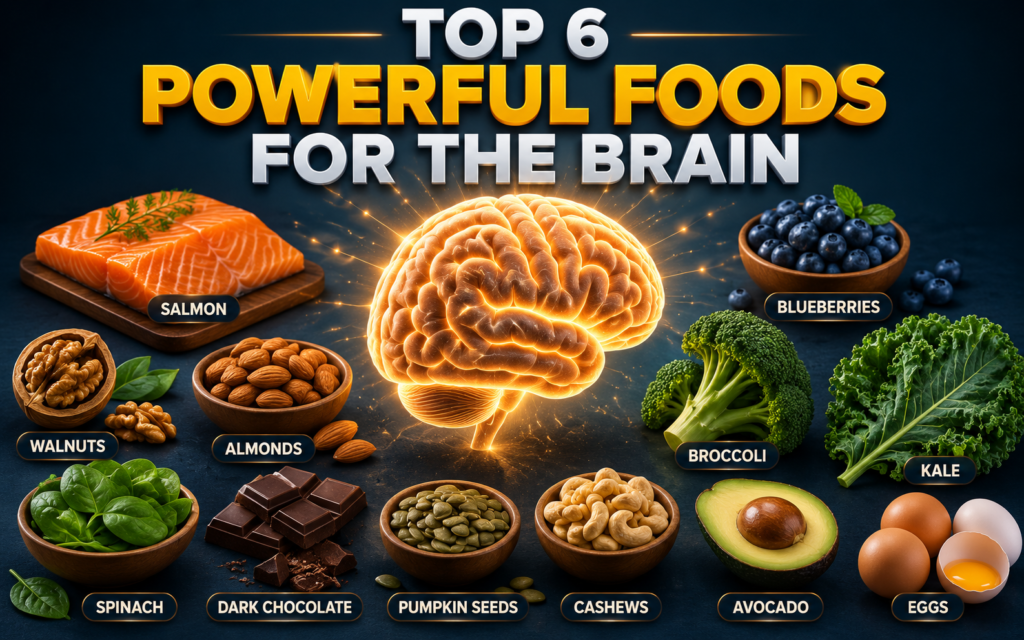
Your brain controls everything from thoughts to actions. To keep this powerful machine sharp and energized, proper nutrition is essential. Discover science-backed foods that may help fuel brain function, improve focus, support memory, and protect long-term cognitive health.
Contents
- Fatty Fish Rich in Omega-3
- Nuts and Seeds
- Leafy Greens & Antioxidant-Rich Vegetables
- Eggs – A Great Source of Choline
- Dark Chocolate
- Blueberries
- Tips for a Healthy Brain
- Conclusion
1. Fatty Fish Rich in Omega-3
Examples: Salmon, mackerel, tuna, sardines, herring
Nutrients: Rich in high-quality protein, Omega-3 fatty acids (EPA & DHA), vitamin D, vitamin A, selenium, and iodine.
Brain Benefits:
Supports brain structure: DHA makes up a large portion of the brain’s fat content and helps maintain healthy brain cells.
Improves memory and cognition: May support learning, focus, and healthy aging while helping reduce cognitive decline.
Reduces inflammation and stress: Omega-3 may improve blood flow to the brain and help support emotional well-being.
Supports brain development: Especially important for children and fetal brain development.
💡 Tip: Aim to eat fatty fish 2–3 times per week. If needed, consult a healthcare professional about Omega-3 supplements.
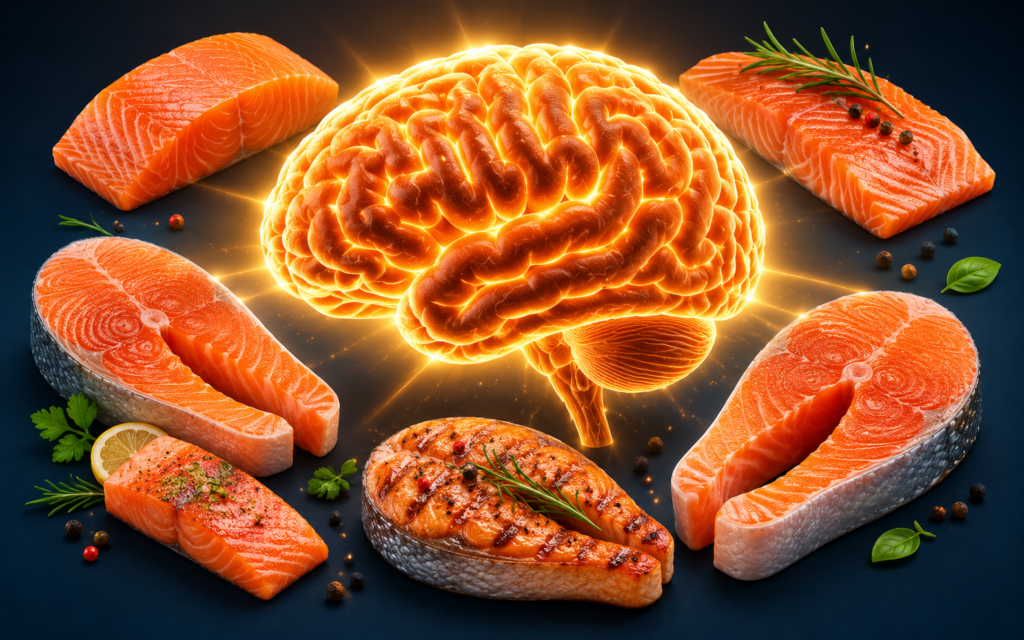
Fatty fish like salmon may support memory, focus, and brain health.
2. Nuts and Seeds
Examples: Walnuts, almonds, pumpkin seeds, cashews
Nutrients: Rich in Omega-3 fats, vitamin E, magnesium, zinc, and antioxidant polyphenols.
Brain Benefits:
Walnuts: High in Omega-3s that may help support memory and brain protection.
Almonds: Rich in vitamin E and protein that support brain cell health and mental energy.
Pumpkin Seeds: Contain magnesium and zinc that help support mood, sleep quality, and nerve signaling.
Cashews: Magnesium may help relax blood vessels and support nervous system function.
💡 Tip: Add a handful of nuts to yogurt, salads, or breakfast meals. Choose unsalted and minimally processed varieties.
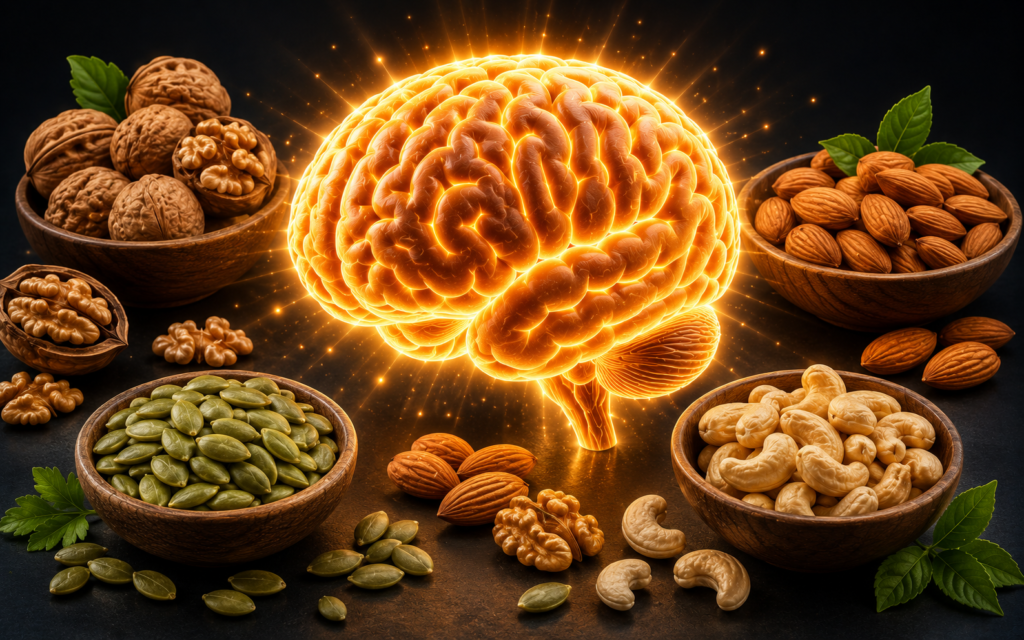
Nuts and seeds provide healthy fats and antioxidants for brain support.
3. Leafy Greens
Examples: Broccoli, kale, spinach
Nutrients: Contain vitamin K, lutein, folate, beta-carotene, and vitamin C.
Brain Benefits:
May help protect brain cells and support memory.
Help fight oxidative stress and inflammation.
Support healthy blood circulation to the brain.
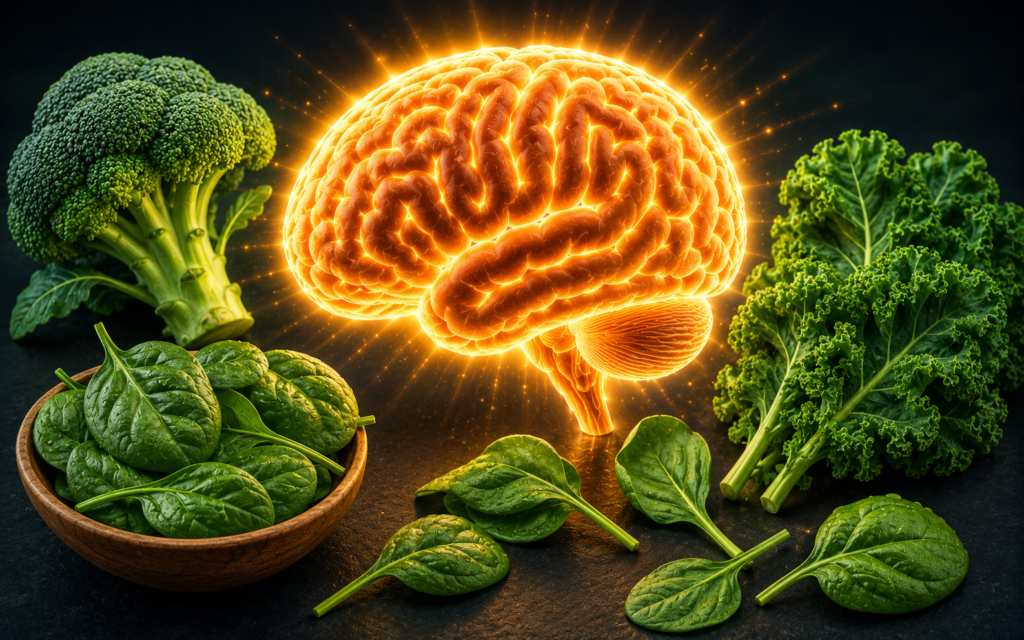
Leafy greens may help protect brain cells and support cognitive function.
4. Eggs – A Valuable Source of Choline
Nutrients: Choline, protein, vitamin B12, lutein, and zeaxanthin.
Brain Benefits:
Choline: Helps produce acetylcholine, a neurotransmitter involved in memory and focus.
Vitamin B12: Supports healthy nerve function and cognition.
Antioxidants: Help protect the brain from oxidative damage.
💡 Tip: Enjoy 3–5 eggs weekly, preferably boiled or steamed for maximum nutrition.
5. Dark Chocolate
Nutrients: Rich in flavonoids, caffeine, and theobromine (especially dark chocolate with 70%+ cocoa).
Brain Benefits:
May improve blood flow to the brain and support concentration.
Helps reduce stress and support mood balance.
Antioxidants may help protect brain cells from aging-related damage.
Can promote alertness and mental clarity.
💡 Tip: Enjoy 1–2 small pieces of dark chocolate daily.
6. Blueberries
Blueberries are considered a “superfood” for the brain because they are packed with flavonoids and antioxidants.
Brain Benefits:
May support memory and cognitive performance.
Help stimulate communication between brain cells.
Support healthy blood flow to the brain.
May improve focus and mental sharpness.
💡 Tip: Enjoy around 10–15 blueberries daily as part of a balanced diet.
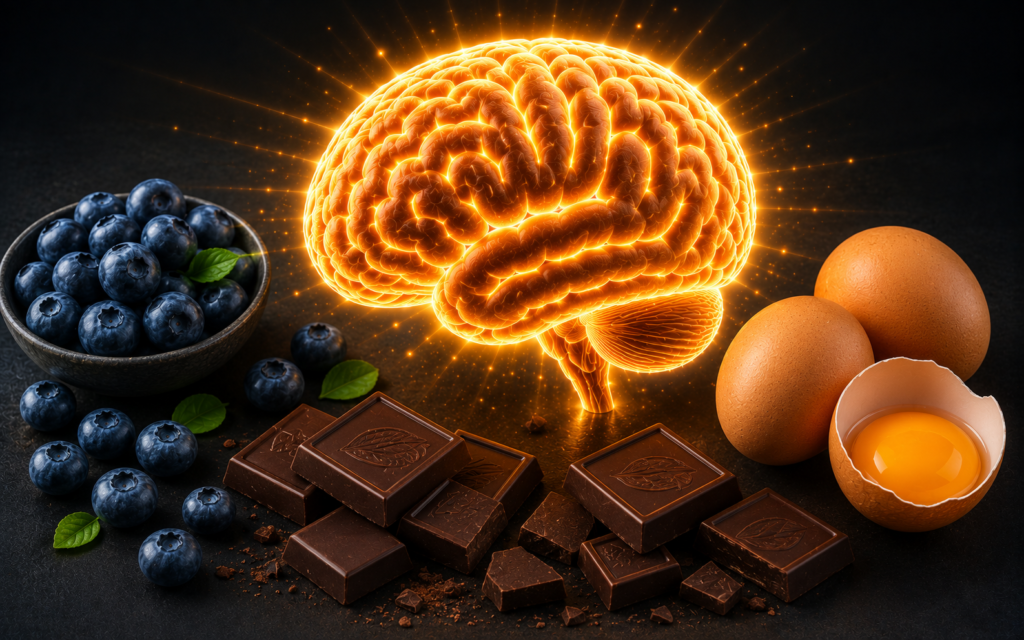
Blueberries, dark chocolate, and eggs may support mental clarity and memory.
Tips for a Healthy Brain
A brain-friendly diet should focus on healthy fats, antioxidants, vitamins, and nutrient-dense whole foods. Include foods like salmon, berries, leafy greens, and nuts while maintaining healthy lifestyle habits.
- Sleep 7–8 hours per night
- Exercise regularly
- Manage stress levels
- Limit alcohol consumption
Conclusion
A balanced diet combined with a healthy lifestyle may help support memory, mental clarity, long-term cognitive health, and overall quality of life as you age.
⚠️ Disclaimer: This content is for educational purposes only and is not intended as medical advice.